
Union to control strikers
Union to control strikers
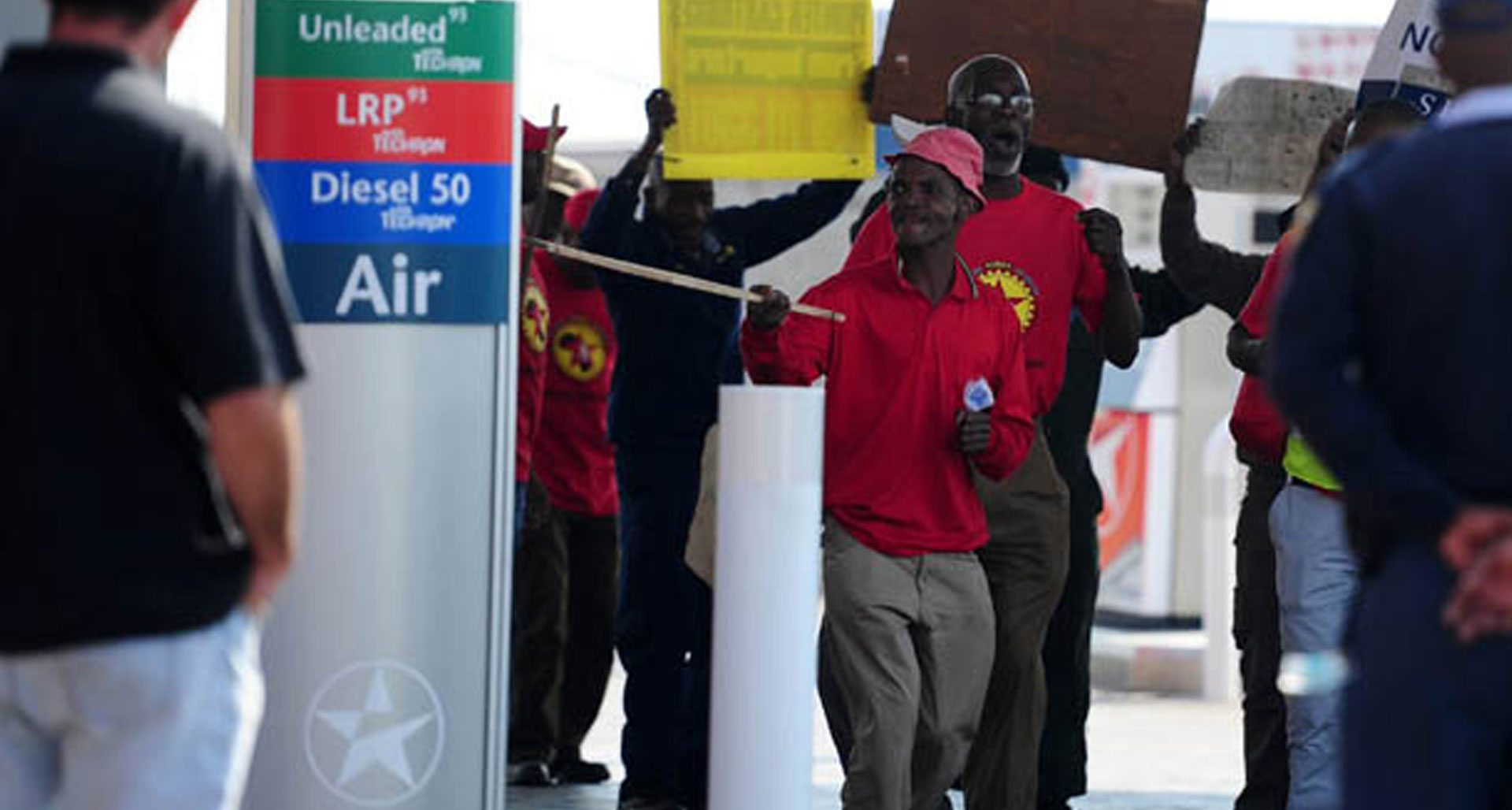
This is amid reports of intimidation and one of murder, allegedly at the hands of the National Union of Metalworkers SA (Numsa) members as the strike enters its 10th day. The incidents have also led the Fuel Retailers Association (FRA) to secure a court interdict which it hopes will prevent future violent behaviour by strikers.
Reggie Sibiya, FRA chief executive, said the interdict was granted
yesterday without opposition by Numsa. It prevents demonstrators from
picketing within business premises, carrying or displaying weapons,
including sticks and knobkerries, and ceases any form of intimidation by
strikers toward employees, business owners and customers. It also stops
strikers from blocking exits and entrances to businesses or face
criminal action, he said.
“There have been quite a few problems. We are happy that the
interdict was granted.” Numsa’ national motor sector co-ordinator Elias
Kubeka, confirmed that about 200 reports of intimidation and violence
had been recieved a quarter which provided evidence that those involved
were in fact union members.
“We have evidence and we are working on ensuring that action will be
taken,” said Kubeka. Instructions have been issued to all local and
national strike committees and office bearers to guarantee Numsa members
refrained from this behaviour.
Reports of intimidation have flowed in from
all parts of the country. A Somali petrol attendant died at the weekend
after being allegedly attacked by striking workers last week in Cape
Town, according to reports.
On Johannesburg’s East Rand, 50 strikers were arrested following
violence in Croydon, according to the Kempton Express. The Citizen
photographer, Neil McCartney was assaulted with sticks and slapped
around by Numsa members for taking their pictures during demonstrations
in the same area. In Esther Park, nine petrol attendants were assaulted
and six were forced to join the strike.
The Tubatse filling station Owners Association told the
Steelburger/Lydenburg Newspaper in Mpumalanga that intimidation by
strikers included abduction and assault of employees, threats to injure
or kill non-strikers at their homes and the theft of cellphones, cash
and tags from attendants.
Some Numsa members would not refrain from carrying weapons despite
the union asking them to do so, said Kubeka. ”I don’t know why they
don’t listen. We have an element where some people believe in militancy
and show disregard for the union.
“There could also be situation where there are new members. Another
problem we have is where some companies refuse to have shop stewards, so
there is a situation where there is no leadership.” Numsa office
bearers have since been taking a more “assertive role”.
A report on the incidents and recommendations to Numsa’s national
office bearers must be presented by its regional leadership. Numsa would
then “propose a function” against members, said Kubeka. He however
couldn’t explain what that “function” would be as it didn’t exist in the
Numsa Constitution.
About 70 000 Numsa members were on strike. However, there have been
reports that some non-unionised workers had also joined in solidarity,
he said. Numsa would settle for a wage increase above 10%. It also wants
deferential salaries to be removed between rural and urban filling
stations. It has since received an offer for night shift allowance, but
it was not “adequate”, he said.
Sibiya said most business had been directly affected due to the number of violent incidents through the strike.
Millions had been lost, he said. National police could not
immediately provide the exact number of incidents linked to the strike
since it began.